Ontario residents experience identical anxiety symptoms when the sky reaches its bruised purple color and the wind begins to howl across the Great Lakes. The basement sump pump and the frozen expensive steaks and the furnace which protects pipes from freezing during mid-January all require our attention. The showroom floor becomes our destination because salespeople there assume that customers always prefer larger products. The statement needs confirmation.
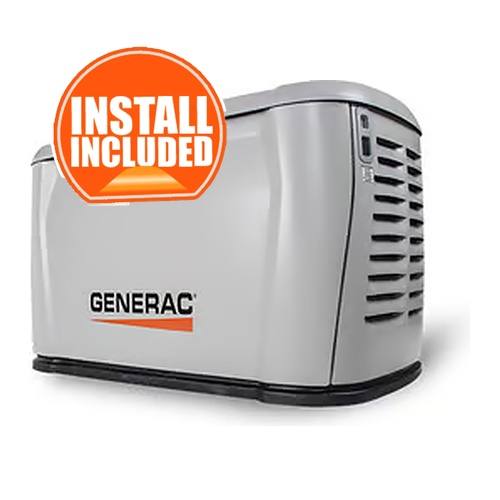
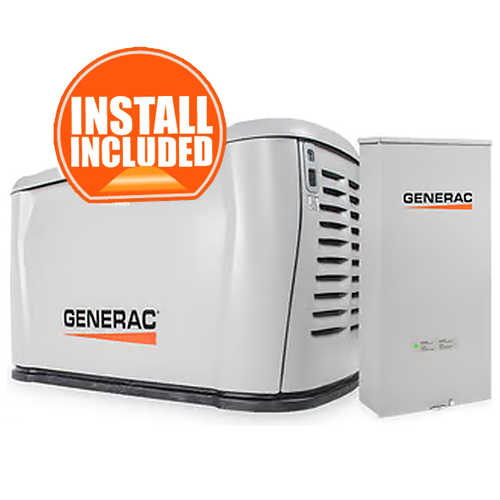
For many, the standard recommendation for a medium-to-large family home is the 22 kw Generac generator. The standby world considers this unit to be its optimal performance point. The system delivers sufficient power capacity to operate all household equipment which includes central air conditioning systems and electric ovens without requiring users to purchase expensive liquid-cooled commercial systems. The process of selecting a generator requires you to comprehend your home’s basic dimensions together with your actual emergency power needs.
The Math Behind the Magic: How Sizing Actually Works
To avoid being oversold, you need to think like an engineer, not a consumer. When you use a generator size calculator Canada residents often find that their actual power needs are lower than they expected. Most people assume they need to power every single outlet simultaneously. In reality, you only need to power what you actually use at the same time.
The calculation is a simple two-step process:
- Identify Running Watts: This is the energy required to keep an appliance going (e.g., a refrigerator uses about 700 to 800 watts).
- Account for Starting Watts: Appliances with motors (like AC compressors or well pumps) need a massive “surge” of power just to get moving often three times their running wattage.
Your generator will fail to operate when your air conditioning system starts because you have not included surge requirements in your calculations. Your generator requirements will exceed necessary capacity when you size your equipment to handle simultaneous maximum surge events.
Regional Realities: What Size Generator for House Ontario?
Geography plays a huge role in your power requirements. When asking what size generator for house Ontario homeowners need to consider the extreme temperature swings. In the summer, a 3-ton AC unit is a heavy lift. In the winter, if you have an electric furnace or heat pump, your energy needs skyrocket.
A typical 2,500-square-foot home needs a 22kW unit in both the GTA and Simcoe County. The starting wattage requirements for rural residents who use well pumps and sump pumps must be met without exceptions. A well pump requires 4,000 watts of power for its initial operation. The smaller 10kW and 14kW units will experience problems when your water heater and oven require operation at the same time.
The Comparison: 22kw vs 24kw vs 26kw Generator
Lately, the market has seen the introduction of even larger air-cooled units. When looking at the 22kw vs 24kw vs 26kw generator lineup, the differences can seem marginal, but they matter for specific high-demand homes.
- The 22kW: The traditional champion. It is highly efficient and uses a time-tested G-Force engine. It is perfect for 90% of suburban homes.
- The 24kW: Introduced to provide that extra “cushion” for homes with two AC units or those who don’t want to manage their power usage at all during an outage.
- The 26kW: The current king of air-cooled power. This unit is designed for large estates or homes with “luxury” loads like heated driveways, steam showers, or extensive outdoor lighting.
The jump from 22kW to 26kW isn’t just about the numbers; it’s about the capacity to handle multiple high-surge items simultaneously. If you have a large family where multiple people might be showering, cooking, and running the AC at the same time, the 26kW provides the peace of mind that the breaker will never trip.
Efficiency and Fuel: The Hidden Cost of “Going Big”
A salesperson will hide from customers that larger generators need extra fuel to operate their equipment even when the machines do not run at maximum capacity. Your decision to purchase a 26kW unit but use only 5kW during outages operates like driving a semi-truck to pick up a loaf of bread. Your current methods of using propane or natural gas create an unnecessary fast consumption of your fuel resources. The reason behind this decision shows that “load shedding” presents a better approach.
By using a Smart Transfer Switch, you can tell your generator to prioritize the fridge and furnace, and only power the dryer or hot tub if there is enough “room” left in the power budget. This allows you to stick with a more efficient 22kW model while still enjoying the luxuries of a whole-home backup.
Why Generac?
With so many brands on the market, why do so many Canadians land on this specific name? Generac generators are engineered specifically for the residential market, meaning they are designed to be quiet, aesthetically pleasing, and easy to maintain. Their aluminum enclosures are a must-have for our salty, snowy winters, as they would not rust like steel alternatives. The Mobile Link™ technology enables you to monitor your generator’s status through your phone from any location including your workplace and vacation destinations which protects you from returning home to a dark house.
Frequently Asked Questions (FAQ)
1. Can a 22kW generator run my whole house?
The answer is usually yes. The 22kW unit delivers its power output through 91.6 amps at 240V. The 200-amp service operates all home equipment and multiple lights and one 5-ton air conditioning system as long as no high-power appliances such as dryers and ovens operate simultaneously.
2. Is there a big price difference between 22kW and 26kW?
The unit price normally varies between $1,000 and $1,500. However, you should also consider that a 26kW unit may require a larger gas line or a higher-pressure meter from your utility provider, which can add to the installation cost.
3. Do I need a concrete pad for these generators?
While many homeowners will choose a poured pad, the Guardian Series line frequently comes with a composite mounting pad that can be set directly on a bed of crushed stone, saving install time and dollars.
4. What happens if the generator is too small?
If your power demand exceeds the generator’s capacity, the circuit breaker on the generator will trip. The engine will continue operating, but electricity will not power the house until you decrease the load and reset the breaker.
5. How long will a 22kW generator run on a 500-gallon propane tank?
At home power consumption which reaches half of the total capacity a 22kW generator uses between 2.1 and 2.5 gallons of propane every hour. The 500-gallon tank which reaches 80% capacity will provide continuous power for approximately 7 to 8 days according to theoretical calculations.